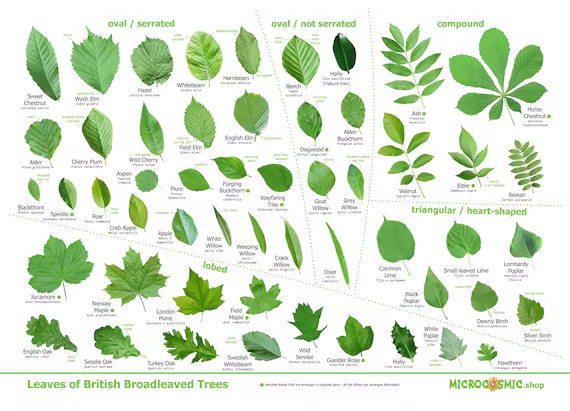
Leaves are one of the most revealing features of a tree, and learning to read their shapes and edges can turn a simple walk into a botanical treasure hunt. By paying attention to two key traits—shape and margin—you can quickly narrow down the species you’re looking at.
1. Start with Overall Shape
Leaf shapes vary widely: oval, lobed, heart-shaped, needle-like, or fan-shaped. Maples, for instance, have distinct lobes that form a hand-like shape, while dogwoods show off smooth, oval leaves with curved veins.
2. Study the Leaf Margin (Edge)
The margin is where details shine. Edges may be smooth, serrated (toothed), wavy, or lobed. Elm leaves often have sharp, saw-toothed margins, whereas magnolias tend to have broad, smooth edges.
3. Look for Symmetry and Veins
Some leaves, like those of the American basswood, are asymmetrical at the base. Others display very regular, radiating veins—ginkgo leaves are known for their fan shape and neat vein patterns.
Leave a Reply