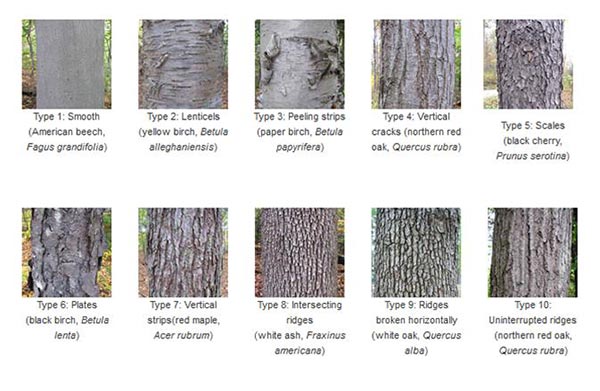
When leaves are out of reach or missing altogether, bark becomes one of the most reliable clues for identifying trees. Each species has its own distinct texture, color, and pattern.
1. Look at Texture
Tree bark can be smooth, furrowed, plated, or exfloiating/peeling. For example, beech trees have smooth, gray bark, while mature oaks tend to develop deep ridges and furrows.
2. Notice Color and Sheen
Some bark is strikingly colored: birches often show pale white or yellow bark that peels in papery strips, whereas cherry trees may have a reddish-brown bark with a glossy sheen and horizontal lines.
3. Examine Patterns
Patterns can be the biggest giveaway. Sycamores show patchy, camouflaged bark as outer layers flake off. Pine species differ too—some have rectangular plates, while others feature rough, irregular patterns.
4. Check for Unique Traits
Certain trees have unmistakable quirks: shagbark hickories develop long, curling strips that hang from the trunk, and American Sycamores can shed bark dramatically in colorful sheets.
5. Use Touch as Well as Sight
Feel the bark—some species are noticeably soft, spongy, or fibrous. Texture adds another dimension that photos alone can’t capture.
Learning to identify trees by bark turns winter walks and leafless forests into a discovery game. With a bit of practice, you’ll start recognizing familiar trunks long before the branches or leaves give them away.
Leave a Reply